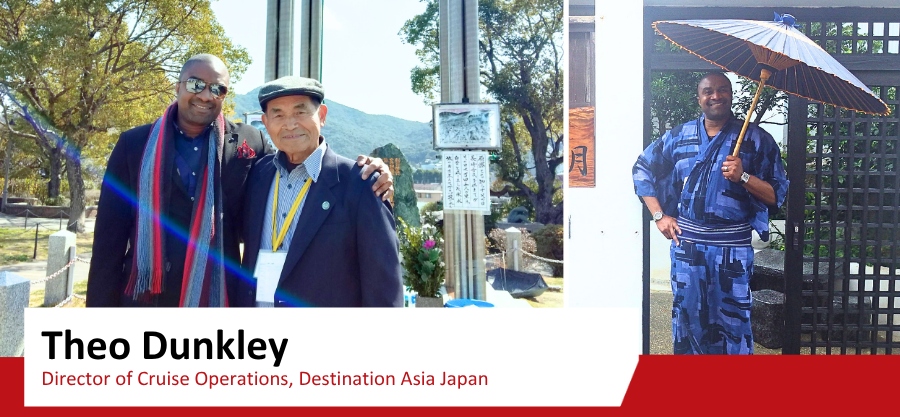
We interviewed Theo, Cruise Director at Destination Asia Japan, to learn more about his journey in Asia and what first drew him to the country.
With around 20 years of experience in Japan, Theo has always had a strong connection to its culture and history. His fascination began as a teenager, when he started studying Japanese culture, with a particular interest in Bushido, the Samurai code.
Today, that passion has become a career, allowing him expertise of the cruise industry with his passion for travel.
What major trends are you currently seeing in the cruise industry across Japan?
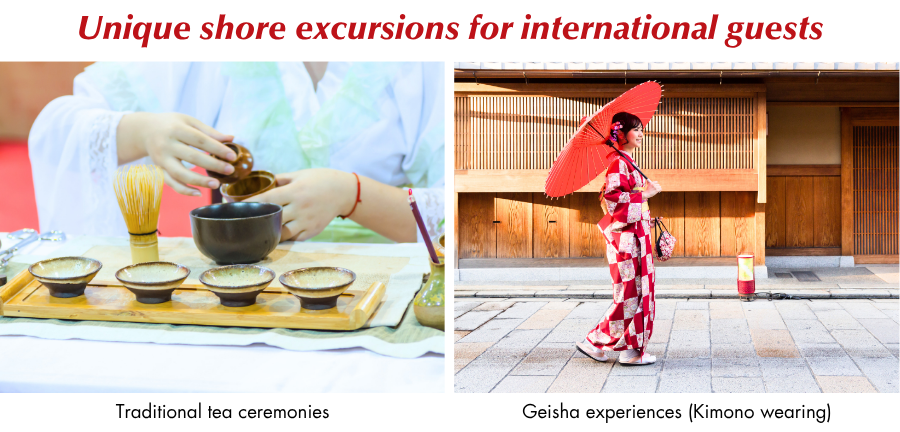
We’re seeing more guests looking for bespoke experiences away from the usual tourist spots and large crowds. This could include learning a traditional craft directly from a skilled artisan, such as pottery in Arita or indigo dyeing in Tokushima, or visiting a rural village for walks with locals and a home-hosted meal. These experiences offer a more personal connection to the destination and let guests experience a side of Japan they may not encounter on a traditional sightseeing itinerary.
How do seasonal changes like cherry blossom or autumn foliage impact cruise itineraries?
Cherry blossom season is one of the most popular times for cruise lines to visit Japan, but it’s also the busiest. Popular sites can be very crowded, availability is limited, and prices are often higher.
Autumn is a great alternative, with spectacular foliage and fewer crowds, allowing guests to enjoy a more relaxed and immersive experience. It’s also a particularly rewarding time to experience local culture and seasonal traditions. Autumn is peak fruit-harvesting season, with apples, Japanese pears and persimmons, and many farms offer all-you-can-pick experiences as well as family-hosted lunches. It’s also Matsuri, or festival, season, with many community-focused festivals historically connected to gratitude for the harvest. One example is the centuries-old Nagasaki Kunchi Festival, which blends Japanese, Chinese and international influences.
Are there any emerging ports or destinations in Japan that you think will become more important for cruise calls?
Hokkaido is an emerging destination, particularly for expedition cruises, with our team as one of the only DMCs currently operating excursions here. It offers a remote, rugged, and wild contrast to the skylines and ancient temples of mainland Japan, with an identity shaped by raw landscapes and deep-rooted heritage rather than urban development.
It offers many of the experiences you might associate with an Alaska cruise, from whale watching and wildlife encounters to seeing deer, salmon and even bears in their natural surroundings. What makes Hokkaido particularly special is that all of this comes alongside the unique culture, cuisine and landscapes of Japan. It offers a great combination of adventure and discovery, with the added mystique of exploring a less-visited side of the country where nature takes centre stage.
How is sustainability influencing cruise operations and shore excursions in Japan?
There has certainly been a growing focus on sustainability across the cruise industry, particularly as younger travellers become an increasingly important part of the cruising market. Guests are becoming more conscious of the impact their travel has and are actively looking for more responsible ways to experience a destination.
For shore excursions, this means there is growing demand for experiences that support local communities, use local suppliers, and showcase the destination without putting unnecessary pressure on the environment or local sites.
Ultimately, sustainability is becoming less of an added benefit and more of an expectation. Cruise lines, destinations, and DMCs like us that align with GSTC, can offer meaningful, responsible experiences will be better positioned to meet what the market is looking for.
How do you balance traditional local culture with modern expectations on luxury cruises?
Education is key, for both guests and suppliers. Guests need to understand and appreciate that customs and behaviours can be very different from what they are used to at home. Something that may be completely acceptable in one culture may be considered inappropriate in another, so helping guests understand these differences is an important part of creating a respectful experience.
At the same time, local suppliers and communities also need to understand that international visitors may not be familiar with these customs or know what is expected of them.
The role of the destination team is to help bridge that gap. By preparing both guests and suppliers and encouraging mutual understanding, we can create experiences that respect local culture while still meeting the high standards expected by luxury cruise guests.
How does your team work with local authorities and communities to ensure seamless operations for cruise lines and their guests?
Education is key for both guests and suppliers. Guests need to understand and appreciate that customs and behaviours can be very different from what they are used to at home. Something that may be completely acceptable in one culture may be considered inappropriate in another, so helping guests understand these differences is an important part of creating a respectful experience.
At the same time, local suppliers and communities also need to understand that international visitors may not be familiar with these customs or know what is expected of them.
The role of the destination team is to help bridge that gap. By preparing both guests and suppliers and encouraging mutual understanding, we can create experiences that respect local culture while still meeting the high standards expected by luxury cruise guests.
What measures are taken to ensure safety, efficiency, and guest satisfaction during turnarounds and port calls?
Continuous staff training and clear standard operating procedures and policies ensure safe and efficient operations. Our team leaders are also provided with mobile phones so they can be contacted at any time while on-site, allowing us to respond quickly if any issues arise and keep operations running smoothly.
What is Destination Asia Japan doing to ensure there are enough quality guides available to meet the increase in demand by cruise lines?
We are continuously recruiting guides across Japan and running regular tour guide workshops to strengthen our network and maintain quality. We also focus on building long-term partnerships with our guides by offering competitive rates and creating a strong sense of partnership. This helps us secure reliable, experienced guides who want to stay long-term with Destination Asia as demand from cruise lines continues to grow.
For more information about Japan, get in touch with our team at [email protected]