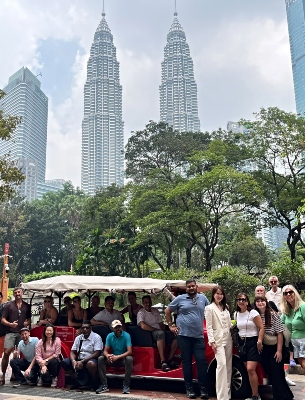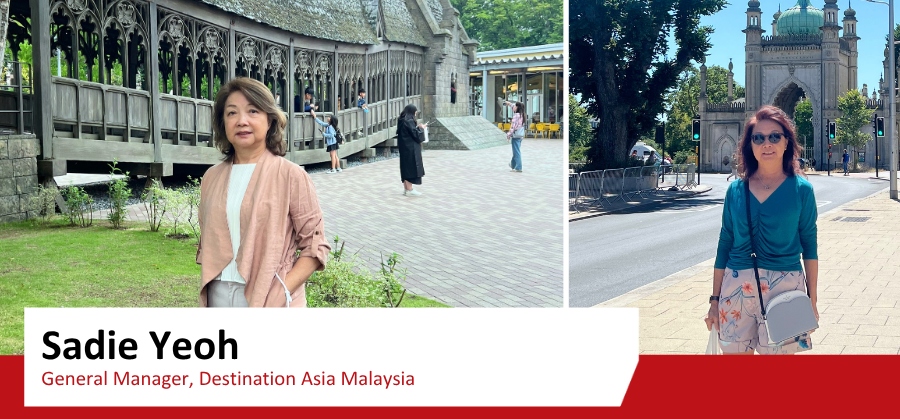
We spoke to Sadie, who has been with Destination Asia for over 15 years. During this time, she has been involved in developing and promoting Malaysia as a destination, working closely with our global sales offices and local partners, and alongside talented teams across Leisure, MICE and Cruise to create meaningful travel experiences for our travellers.
Malaysia is known for its diversity, but how does it cater to different types of travellers?
Malaysia is a destination where every generation and type of traveller can find something meaningful. You can come here several times and have a completely different experience each time. I have been closely involved in developing the destination for many years, and I still find some places and experiences surprise me. You can spend a few days in Kuala Lumpur, head into the rainforest, explore a quieter coastal destination or simply focus on food and culture, and each experience feels very different. I also think Malaysia works particularly well for families and multi-generational travel because there is something for everyone, whether it’s focusing on culture and cuisine or adventure and time by the beach. What makes it easy is that these experiences can often be combined within the same trip, rather than everyone having to follow a completely different itinerary.
How do you work with national organisations and companies to promote Malaysia and make it more accessible to travellers?
We work closely with national tourism organisations, hotels, local communities and tourism partners to create attractive and memorable travel experiences, while our international sales offices bring valuable insight into different source markets and traveller preferences. With the momentum of Visit Malaysia Year 2026, now extended through 2027, we are working alongside our travel partners through destination campaigns, trade events, familiarisation trips and market updates. This helps us showcase Malaysia globally while highlighting authentic experiences across Leisure, MICE and Cruise.
Which less well-known locations in Malaysia do you think deserve more attention from international travellers, and why?
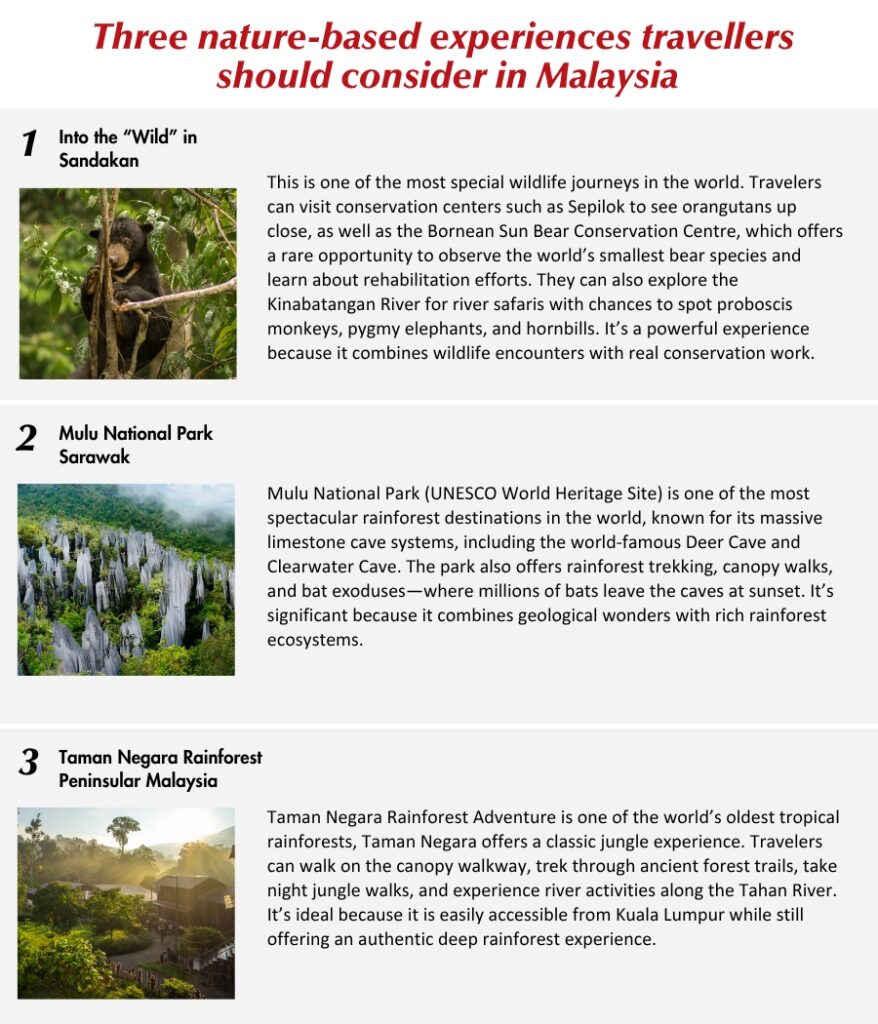
Malaysia has many well-known destinations, but places such as Lahad Datu and the East Coast of Peninsular Malaysia deserve more attention. Lahad Datu provides access to the Danum Valley Conservation Area, offering extraordinary rainforest and wildlife experiences for travellers looking for deeper connections with nature.
Further south, destinations across Terengganu, Kelantan and Pahang offer beautiful islands, traditional fishing villages, local crafts and authentic Malay culture. Places such as Perhentian, Redang and Tioman are particularly appealing for travellers looking for a more relaxed and less commercialised coastal experience.
What new hotels and attractions are opening in Malaysia that excite you?
Malaysia is seeing an exciting wave of new luxury and boutique hotels across destinations including Kuala Lumpur, Sabah, Penang and Langkawi. In Kuala Lumpur, Park Hyatt Kuala Lumpur brings a new level of luxury to the city with its location within Menara Merdeka Maybank, while the upcoming Waldorf Astoria Kuala Lumpur will further strengthen the city’s high-end hospitality offering. Penang is also developing its luxury and boutique offering, with new properties adding to the island’s appeal as a heritage, lifestyle and culinary destination. In Sabah, the upcoming Club Med Borneo in Kuala Penyu is particularly interesting, bringing a nature-focused resort experience to the region. Together, these exciting developments reflect Malaysia’s growing focus on experiences that combine international standards with a strong sense of place.
What are some of the latest developments in Malaysia e.g., infrastructure and connectivity to new tourism experiences, that travel planners should have on their radar?
Improved connectivity is helping to open more of Malaysia to international travellers. Kuala Lumpur International Airport continues to enhance its capacity and digital infrastructure, while Penang is also developing a new terminal targeted for completion in 2028.
The East Coast Rail Link is another significant development, connecting Kuala Lumpur with Pahang, Terengganu and Kelantan and making it easier to incorporate lesser-visited destinations into itineraries. In Penang, the planned Light Rail Transit system will improve connections across the island and make it easier for travellers to access key cultural, culinary and leisure areas. These developments will help create more convenient and connected journeys while opening up opportunities to explore beyond Malaysia’s traditional tourist routes.
Share a standout journey that you have taken in Malaysia and would recommend to any first-timer visiting the country.
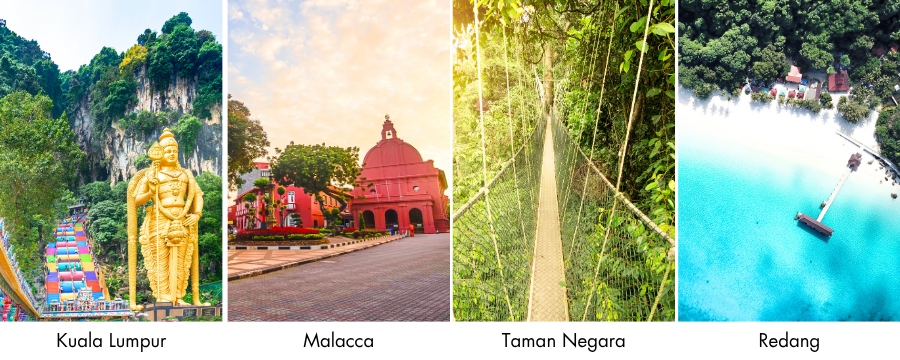
For a first-time visitor, I would recommend a journey that combines Kuala Lumpur, Malacca, the rainforest and the East Coast islands. It gives travellers a great introduction to the diversity of Malaysia without feeling rushed.
Start in Kuala Lumpur to experience the city’s modern skyline, cultural landmarks and multicultural food scene, before travelling to Malacca to discover its heritage, architecture and unique cultural influences. From there, continue to Taman Negara for rainforest experiences such as jungle trekking and canopy walks, before ending on an island such as Redang or Perhentian to relax and enjoy the beaches and clear waters.
What are the benefits of working with a DMC such as Destination Asia when planning travel in Malaysia?
A DMC brings local expertise and on-the-ground knowledge, which is particularly valuable in a diverse destination like Malaysia. Having focused solely on Asia for more than 30 years, Destination Asia has a depth of experience and local knowledge that is difficult to match. Our long-standing relationships with hotels, guides, venues and transport providers also give us access to trusted partners and experiences that may not be widely visible in the market. Just as importantly, our team knows how to bring all the different elements of a journey together, from the initial itinerary design through to the experience on the ground. Combined with the insight of our international sales offices, this allows us to create journeys that are seamless, well considered and genuinely tailored to each traveller.
What do you wish more people knew about Malaysia?
Malaysia is one of the few countries where you can experience ancient rainforests, world-class wildlife, vibrant cities, and pristine islands, all in one journey, often within a few hours of travel time. It’s also a destination where culture is lived every day, with the influence of Malay, Chinese, Indian and indigenous communities seen through food, architecture, markets and traditions.
I also love that culture here is something you experience as part of everyday life. The influence of Malay, Chinese, Indian and indigenous communities can be seen everywhere, from food and markets to architecture and traditions. And for a country with such incredible natural diversity, nature is surprisingly accessible. Whether it is seeing the Borneo Big Five, walking through centuries-old rainforest or exploring coral reefs off the East Coast, you can have really immersive nature experiences without feeling far removed from local life. For me, that combination of accessibility, authenticity and diversity is what makes Malaysia so special.
What is your favourite local meal and where do you usually go for it?
That is a difficult question because Malaysia is incredibly diverse when it comes to food. A typical day might start with something simple and iconic like roti canai and teh tarik at a local mamak or neighbourhood café, followed by nasi lemak for lunch.
For dinner, I would choose a Peranakan or Nyonya meal, which reflects Malaysia’s rich cultural heritage through its flavours and traditions. What makes Malaysian food so special is that it is more than just cuisine; it reflects the country’s multicultural identity, everyday life and the way different communities come together.
For more information about Malaysia, get in touch with our team at [email protected]